Pharmaceutical export documentation is not bureaucracy — it is the product’s identity. A shipment of medicines without complete papers is, in the eyes of customs and regulators, indistinguishable from counterfeit goods. Here is every document that properly prepared pharmaceutical export documentation from India should include, and what each one proves.
Getting pharmaceutical export documentation right the first time is what separates shipments that clear Tema Port or Kotoka International Airport in days from ones that sit in a bonded warehouse for weeks while paperwork gets sorted out. This checklist covers every category you should expect from a serious exporter.
Commercial Documents in Pharmaceutical Export Documentation
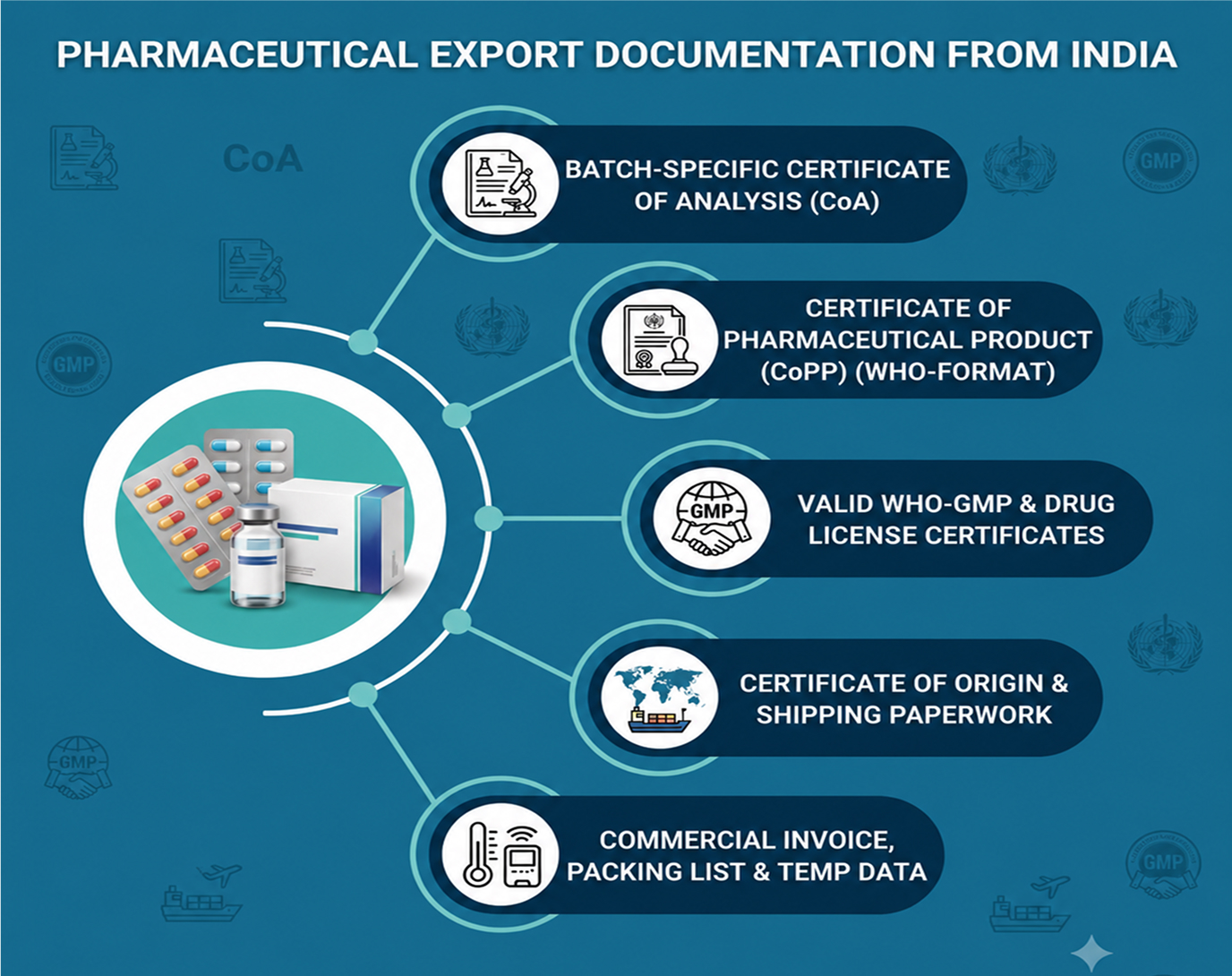
- Commercial Invoice — States the buyer, seller, products, quantities, unit prices, currency, and Incoterms. Must match the packing list and purchase order exactly.
- Packing List — Details cartons, batch numbers, quantities per carton, gross and net weights, and dimensions — the document customs physically checks cargo against.
- Purchase Order and Proforma Invoice — Establish the agreed terms before production and shipment.
Discrepancies between these three documents are one of the most common reasons pharmaceutical export documentation gets flagged for manual review, so it’s worth cross-checking all three before cargo leaves India.
Regulatory and Quality Documents in Pharmaceutical Export Documentation
- Certificate of Analysis (CoA) — Batch-specific laboratory results confirming the product meets its specifications: identity, assay, dissolution, impurities, and microbiology where applicable. Insist on a CoA for every batch shipped.
- Certificate of Pharmaceutical Product (CoPP) — Issued in the WHO format by Indian authorities, confirming the product is licensed and the manufacturer is GMP-compliant. Usually required for FDA Ghana drug registration.
- WHO-GMP Certificate — Site-specific proof of the manufacturer’s compliance. Our detailed guide on WHO GMP certification explains exactly how to read and verify one.
- Exporter’s Drug License — Confirms the shipper is legally authorized to trade pharmaceuticals, issued under CDSCO oversight.
- Batch Manufacturing Records reference and stability data — May be requested by regulators for registration dossiers.
This category is the heart of pharmaceutical export documentation, since it’s what regulators actually scrutinize before granting market access.
Shipping and Origin Documents in Pharmaceutical Export Documentation
- Certificate of Origin — Certifies Indian origin, issued by an authorized chamber of commerce.
- Airway Bill / Bill of Lading — The transport contract and title document.
- Insurance Certificate — Covers the consignment in transit.
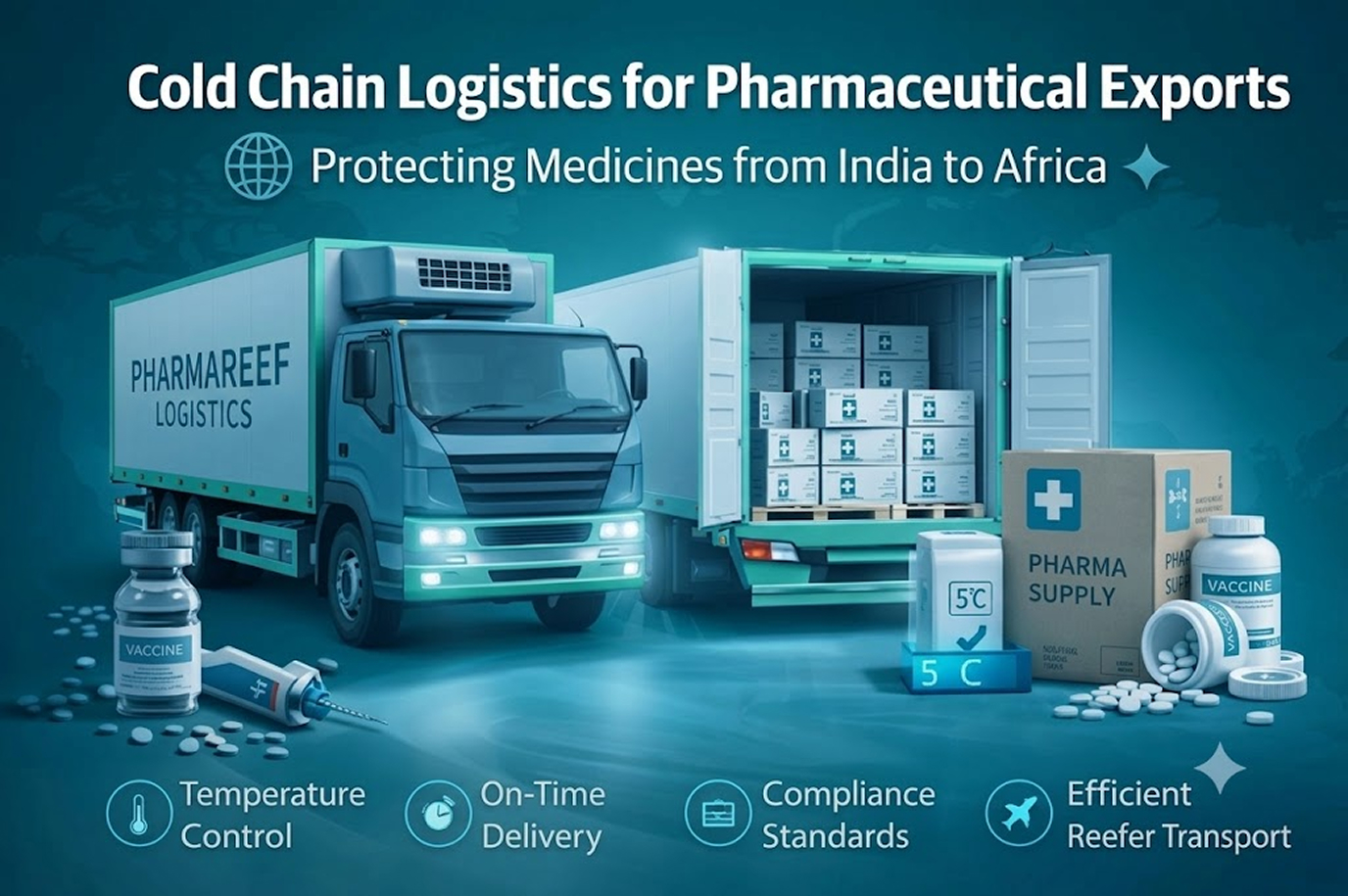
- Temperature Data Logger Report — For cold-chain products, the logger record proves the shipment stayed within range from factory to destination.
Why Complete Pharmaceutical Export Documentation Protects Your Business
Incomplete pharmaceutical export documentation is the single most common reason shipments get held at Ghanaian ports, and it’s entirely preventable if you vet your exporter properly before placing an order. Our 8-point checklist for choosing a reliable pharmaceutical exporter in India covers exactly what to ask for — including documentation capability — before you commit to a supplier.
If you’re earlier in the process and still working out licensing and product registration, our companion guides on how to import medicines from India to Ghana and FDA Ghana drug registration cover the steps that come before documentation ever reaches your desk.
One Partner, Zero Gaps
Divy Tradelink prepares and verifies every document above before cargo leaves India, and shares digital copies with clients in advance so customs clearance in Ghana is prepared before the shipment lands. Complete pharmaceutical export documentation is not an extra service — it is the baseline of professional pharmaceutical export.