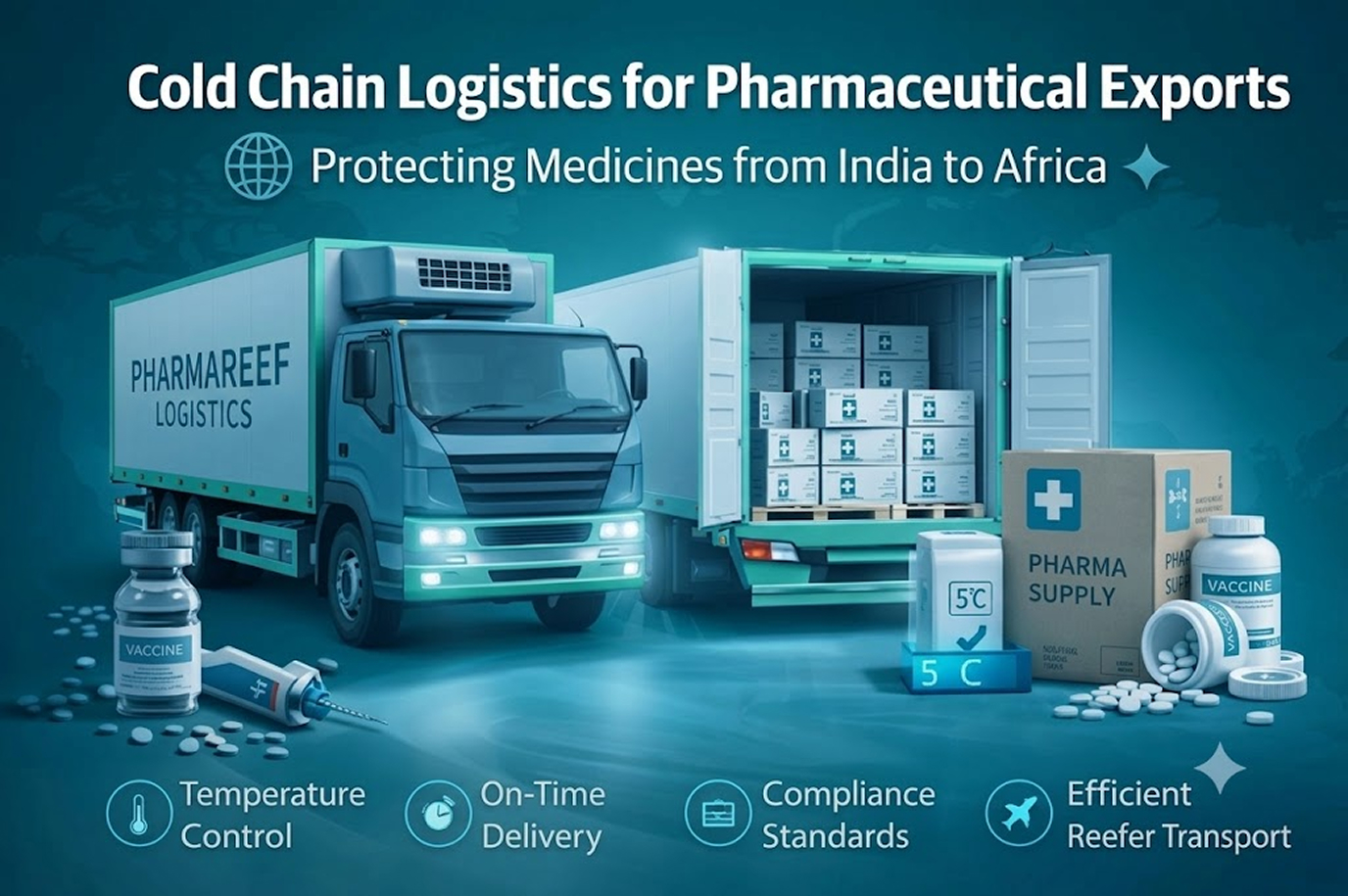
Pharmaceutical cold chain logistics determine whether a vaccine, insulin shipment, or biologic arrives therapeutically intact or quietly ruined. Many of the most valuable medicines are only as good as the temperature they were kept at. A shipment that overheats for a few hours on an airport tarmac can be therapeutically worthless while looking perfectly normal. That is why pharmaceutical cold chain logistics is one of the most critical disciplines in exporting medicines from India to Africa.
This guide covers what the cold chain actually involves, how validated packaging and monitoring work, and how to choose a shipping mode that protects temperature-sensitive medicines all the way to Ghana.
What Pharmaceutical Cold Chain Logistics Involves
Pharmaceutical cold chain logistics refers to an unbroken sequence of temperature-controlled storage and transport. For most cold-chain products the target range is 2–8°C; others require controlled room temperature (15–25°C), which is equally challenging on the hot India–West Africa route. Every link matters: the factory cold room, refrigerated transport to the airport, validated packaging during the flight, and cold storage on arrival in Ghana. A single broken link anywhere in this chain can undo every other precaution taken along the route.
Validated Packaging and Monitoring in Pharmaceutical Cold Chain Logistics
Professional exporters build pharmaceutical cold chain logistics around validated thermal packaging — insulated shippers with gel packs or phase-change materials qualified to hold temperature for 72 to 120 hours. Every consignment should travel with a calibrated temperature data logger. On delivery, the logger file is downloaded and reviewed: if the shipment stayed in range, the record proves it; if not, the record proves that too. Never accept cold-chain cargo without a logger report, and never treat this step as optional regardless of how much you trust the supplier.
This kind of documentation discipline mirrors what we cover in our broader guide to pharmaceutical export documentation — a data logger report is really just one more verifiable document in the full paper trail your shipment should carry.
Choosing the Right Shipping Mode for Pharmaceutical Cold Chain Logistics
Air freight is the default for pharmaceutical cold chain logistics moving from India to Ghana, minimizing transit time and temperature risk. Direct or single-stop routings reduce tarmac exposure. Booking with airlines that participate in IATA’s CEIV Pharma handling program, and using cool storage at transit hubs, adds another layer of protection. Sea freight in reefer containers can suit large, less temperature-sensitive volumes, but it introduces more handoffs and more opportunities for a break in the chain.
Why Pharmaceutical Cold Chain Logistics Depend on the Right Exporter
Not every exporter has real pharma-handling experience, even if they claim cold-chain capability on paper. Before trusting a supplier with temperature-sensitive cargo, it’s worth running them through our 8-point checklist for choosing a reliable pharmaceutical exporter in India — cold-chain competence is one of the eight points precisely because so many exporters overstate it. And because WHO-GMP certification covers storage and handling conditions at the manufacturing site, it’s also the first place cold-chain compliance should start, not just the last mile in Ghana.
If you’re still earlier in the process, our full guide on how to import medicines from India to Ghana covers licensing and customs clearance alongside the logistics considerations discussed here.
How Divy Tradelink Manages Pharmaceutical Cold Chain Logistics
We coordinate temperature-controlled logistics end to end: validated packaging, data loggers in every cold-chain consignment, pharma-experienced freight partners, and pre-alerted clearing agents in Ghana so cargo moves from aircraft to cold storage without delay. When patients depend on a vaccine or an injectable working as intended, pharmaceutical cold chain logistics is not a place to economize.