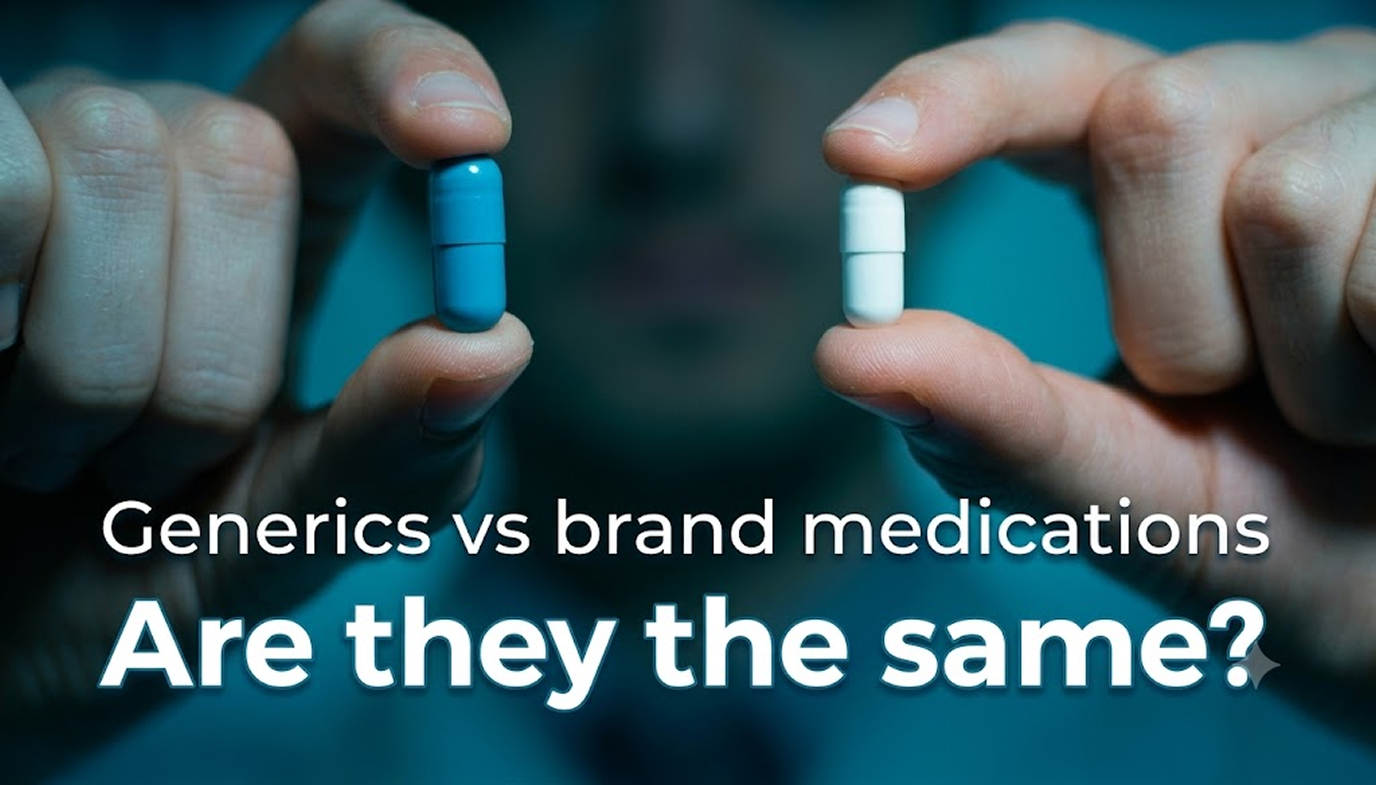
Generic vs branded medicines is one of the most consequential procurement questions a hospital or pharmacy in Ghana will face. Should your budget go toward the originator brand or the generic? For most healthcare buyers, the answer determines whether that budget treats hundreds of patients or thousands. Understanding what actually differs in the generic vs branded medicines debate — and what does not — is essential for confident procurement.
What a Generic Medicine Is in the Generic vs Branded Medicines Debate
A generic medicine contains the same active ingredient, in the same strength and dosage form, as the originator product, and must demonstrate bioequivalence — meaning it delivers the active ingredient into the bloodstream at the same rate and extent. The World Health Organization recognizes bioequivalence testing as the scientific basis for treating a generic as clinically interchangeable with its originator. Once the originator’s patent expires, other manufacturers may produce it. The clinical effect is designed to be the same; what changes in the generic vs branded medicines equation is the price.
Why Generics Cost Less
Generic manufacturers do not repeat the enormous original research and clinical trial programs; they must prove equivalence, not rediscover the molecule. Competition among multiple producers pushes prices down further. Savings of 60–90% versus originator brands are common — which is precisely why national health systems worldwide rely on generics for the bulk of prescriptions, and why this decision is rarely close on cost grounds alone once quality is controlled for.
Quality Depends on the Manufacturer, Not the Category
The honest answer to “are generics as good?” is: a generic from a GMP-certified, properly regulated manufacturer is as reliable as a brand; a product from an unlicensed factory is dangerous whatever the label says. In other words, the generic vs branded medicines question is really a manufacturer-quality question wearing a different label. The buyer’s job is not choosing brand versus generic — it is verifying manufacturing quality. Insist on WHO-GMP certification, batch Certificates of Analysis, and regulatory registration for everything you buy, regardless of which side of the generic vs branded medicines line a product falls on.
India also offers a practical middle path: branded generics — quality generics marketed under a manufacturer’s trade name — combining affordability with brand consistency prescribers and patients can recognize. This is often the most practical resolution for buyers who want cost savings without sacrificing brand familiarity on the pharmacy shelf.
Making the Generic vs Branded Medicines Decision in Practice
In practice, most experienced buyers don’t treat generic vs branded medicines as a binary choice at all — they build formularies around documented quality first, and let brand or generic status follow from there. That means every product, regardless of label, needs a valid FDA Ghana registration and traceable batch documentation before it earns a place on a procurement list. Our guide on pharmaceutical export documentation covers exactly what paperwork should accompany every shipment, whichever category the product falls into.
If you’re sourcing at volume, our guide to working with bulk medicine suppliers and our 8-point checklist for choosing a reliable pharmaceutical exporter in India both help you apply the same quality-first standard across your entire order, not just a handful of flagship products.
The Bottom Line for Buyers
Stock quality-assured generics for your high-volume essentials and let documentation, not marketing, define quality. In the generic vs branded medicines decision, the label matters far less than the paper trail behind it. Divy Tradelink supplies WHO-GMP certified generic and branded-generic medicines from India’s leading manufacturers, with full documentation on every batch — so your patients get proven therapy and your budget goes further, shipment after shipment.